
Cyber Security in Education: Protecting Student Data in Australian’s Schools

Cyber security for educational institutions is more crucial than ever with the ASD Cyber Threat Report 2022-2023 highlighting the education sector has being one of the prime targets for cyber crimes. Schools must therefore strengthen their security and compliance measures.

The Rising Threat Landscape in Education

In recent years, the education sector has become increasingly susceptible to cyber threats. Australia saw a 51% increase in cyber incidents reported by critical infrastructure organisations, including educational institutions. A Check Point Research study showed a weekly global average of 1,739 attacks per education or research organisation.

With 90% of data breaches due to phishing attacks worldwide, students, teachers, and staff are also often targeted through deceptive messages.

Cyber-attacks on the sector are not random. They are targeted and strategic, driven by the potential rewards and the relatively lower security defences compared to other sectors.

Reason #1: Valuable Data

Educational institutions hold a wealth of sensitive data, including personal information of students, staff, and parents, as well as financial records and intellectual property. This data can be highly valuable for cybercriminals seeking to sell it on the dark web or use it for identity theft.

Reason #2: Diverse User Base

Schools and universities have diverse populations of students, teachers, and staff with varying levels of IT expertise. Some are tech-savvy digital natives while others are still mastering computer basics. Everyone needs training and support to ensure each can confidently and securely collaborate better.

Reason #3: Limited IT Resources

Smaller schools often face resource constraints. Staff must juggle multiple responsibilities, including network maintenance, user support, and security. Tight budgets limit cyber security investment. Some could have aging hardware and limited bandwidth. Schools must therefore explore cost-effective cyber security solutions.

Reason #4: BYOD Risks

Bring your own device (BYOD) allows students and staff to use personal devices for learning, but also present security risks:

  • Personal devices may lack proper security measures.
  • Sensitive information can leak if devices are compromised.
  • Infected devices can spread malware within the school network.

Schools can manage BYOD risks by:

  1. Establishing clear policies and guidelines for acceptable device usage
  2. Implementing network segmentation, isolating BYOD devices from critical systems
  3. Adopting mobile device management (MDM) solutions to enforce security policies
  4. Enforcing regular audits to assess compliance and address vulnerabilities

Impact on the Sector

Successful attacks disrupt operations and put student data, including personal and academic records, at risk. This undermines privacy and trust, leading to potential identity theft, financial fraud, and emotional distress.

Technological Innovation in Education

The rapid shift to digital learning environments, especially during the COVID-19 pandemic, has increased the attack surface for cybercriminals. With more devices connected to school networks and the use of various online platforms, there are more opportunities for vulnerabilities making cyber security solutions an all-time priority.

Remote Learning Platforms

Online learning platforms have bridged geographical and time boundaries. Students in any location now have access to the same kind of education. There are live online sessions, shared cloud resources, and virtual interaction. Platforms like Microsoft Teams for Education are boosting collaboration and engagement.

Digital Learning Tools

The sector has also benefitted from the proliferation of digital tools. Interactive whiteboards are replacing traditional chalkboards, allowing dynamic lessons and easier understanding of complex concepts.

Adaptive learning software enable personalised learning pathways. They can analyse student performance and adjust content accordingly. Virtual reality (VR) and augmented reality (AR) are also transporting students beyond textbooks.

Increased Reliance on Technology

Technology has become integral to the educational journey. Laptops, tablets, and Wi-Fi are now lifelines for learning. Teachers are harnessing digital tools to create more engaging content and enhance teaching methodologies.

Educators have shifted from traditional lectures to student-centred learning – facilitating discussions, encouraging critical thinking, and guiding students. Students are empowered by technology to collaborate, create, and explore.

Australian Laws and Regulations

As schools chart a course toward safer digital horizons, they must also comply with relevant regulations.

The Privacy Act 1988

The Privacy Act covers private schools, except those that fall within the small business exemption or do not provide health services (e.g., physical education classes, nursing services). The Australian Privacy Principles (APPs) prescribe how schools must:

  • Have data privacy procedures, practices, and systems to ensure compliance
  • Handle personal data transparently, ensuring consent, accuracy, and security
  • Demonstrate accountability by promptly addressing queries and complaints

Apart from the Australian Capital Territory (ACT), government schools are not directly covered by the Privacy Act. They fall under state or territory privacy legislation or schemes. In Queensland, for example, the transfer of personal information between schools without consent is allowed before enrolment in a new school.

The Australian Education Act 2013

The Australian Education Act governs Commonwealth funding to both government and non-government schools. It specifies specific requirements to receive Australian Government funding for school education, covering student data protection, educational reforms, and financial accountability. Schools are required to manage student data prudently and proactively while fulfilling their educational mission.

Best Practices for Cyber Security in Schools

Safeguarding digital learning environments is highly important today. Educators are responsible for protecting their students, staff, and sensitive data from cyber threats. Below are some best practices:

Password Hygiene

Educate students, teachers, and administrators – everyone in your school community — to create strong, unique passwords.

  • Combine uppercase and lowercase letters, numbers, and special characters
  • Never reveal a password to anybody
  • Encourage regular password updates or implement a password expiration policy

Data Encryption

All sensitive information (e.g., student records, financial data, and research findings), must be encrypted. Encryption ensures that even if data falls into the wrong hands, it remains unreadable. Consult with your IT provider about the different industry-standard encryption methods such as Transport Layer Security (TLS), Full Disk Encryption (FDE) and File-Level Encryption.

Incident Response Plan

Swift action is crucial when a breach occurs. Handling security incidents starts with preparing a well-defined incident response plan, which should include:

  • Designated Incident Response Team: Identify key personnel responsible for handling incidents.
  • Communication Protocol: Establish clear lines of communication during an incident.
  • Containment and Recovery Steps: Consult with your IT support team to outline the steps to isolate the breach and restore normal operations in your school.
  • Legal and Reporting Obligations: Understand our legal responsibilities and reporting requirements.

These best practices can help schools in Brisbane, Townsville, and across Queensland become more cyber resilient. Remember, it’s not just about implementing the right technology but also about fostering a culture of vigilance and shared responsibility among staff and students.

Cyber Security Training for Education Sector Leaders

If you’re not sure where to start with fostering a cyber aware culture in your school or university, ADITS conducts tailored cyber security training sessions for boards and school executives. Kindly fill up the form below:

ADITS and Assuredly Partner to Streamline Privacy Act Compliance

Queensland, Australia [May 2024] – Managed IT & Cybersecurity solutions provider ADITS announced today a strategic partnership with Australian start-up Assuredly, the all-in-one platform for managing cybersecurity controls.  

The collaboration exclusively allows ADITS to manage their clients’ compliance with the Privacy Act inside of Assuredly. This will streamline their customers complex cybersecurity, compliance and reporting processes. 

Dashboard

Evolving Cybersecurity Challenges

Our digital reliance increases more and more every day,” says Adam Cliffe, ADITS SEQ Managing Director. This gives more opportunities to cyber criminals to penetrate IT systems and access sensitive information. It is the responsibility of the business to protect the data they handle. And our partnership with Assuredly combined with our comprehensive CyberShield solution can certainly help organisations do that. 

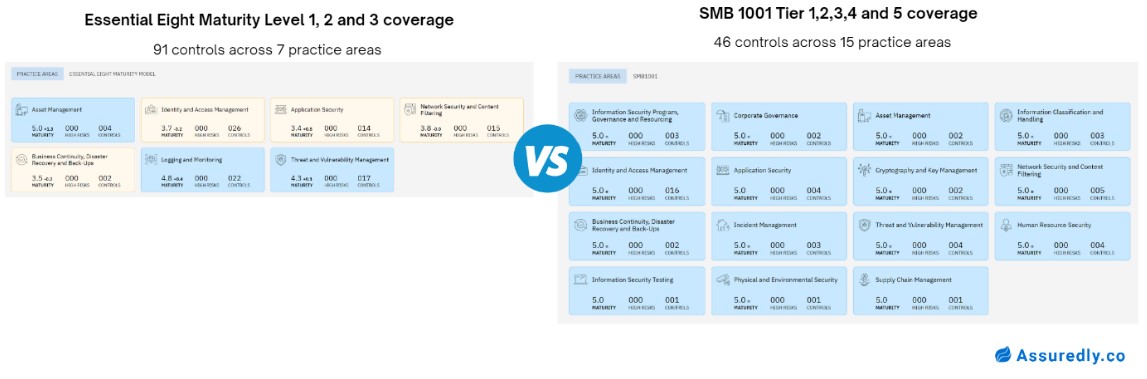
The Assuredly platform has a user-friendly interface to review, evaluate, and demonstrate adherence to cybersecurity frameworks such as: 

  • SMB 1001 – a multi-tiered framework designed for Small and Medium-sized Businesses (SMBs) 
  • ISO 27001 – the leading international standard focused on information security
  • Essential Eight – cyber protection strategies recommended by the Australian government 
  • NIST CSF (National Institute of Standards and Technology Cybersecurity Framework) – a comprehensive reporting framework for mitigating organisational cybersecurity risks
  • SOC2 Assessment – examines an organisation’s internal control environment related to security, availability, processing integrity, confidentiality, or privacy 

New in the platform, and exclusively for ADITS, Assuredly now includes the Privacy Act Reasonable Steps.  

Did you know that even if you have completed a 27001 or NIST CSF Assessment and Certification you will have only covered 50% of the reasonable steps suggested by the OAIC? This indicates a clear need for businesses to take Privacy assessments as seriously as they take their security assessments. 

dashboard

Exclusive Privacy Act Component

The integration of the Privacy Act for ADITS is groundbreaking. This unique feature can help assist businesses comply with the Australian Privacy Principles (APPs) while also build an effective cyber security defence. It stems from ADITS’ shared vision with the Australian Signals Directorate (ASD) and Cyber Security Certification Australia (CSCAU) to improve the cyber resilience of the Australian community. 

This is a significant milestone for ADITS as we play our role supporting the Australian government’s vision to be a world leader in cyber security by 2030,
continues Adam Cliffe.

We’re excited to team up with ADITS and enhance our platform to meet the unique needs of Australian organisations under the Privacy Act,” says Fiona Long, Assuredly Founder and CEO. “The general public can trust that businesses prioritising the privacy and security of stakeholders’ sensitive data are committed to upholding their trust and confidentiality. This partnership between Assuredly and ADITS exemplifies our dedication to this mission.

The Privacy Act 1988 regulates how organisations handle personal information, with standards for collecting, using, and securing data. Compliance with this law is mandatory for most organisations nowadays (Learn more in this article: Navigating Cyber Security Compliance and Regulations: Essential 8 vs. Privacy Act). 

statistics

Moving Forward with Confidence

By adopting robust cybersecurity practices, businesses can significantly reduce their risk of data breaches and associated financial and reputational damage. They can also demonstrate a commitment to data protection, which fosters trust and confidence amongst customers and stakeholders. 

At ADITS, we are committed to finding new and innovative solutions that can provide businesses with the best options to safeguard their data and assets,” says Adam. “This partnership with Assuredly is a great move forward in our efforts to stay ahead of the curve in cybersecurity.

By leveraging the Assuredly platform and ADITS’ cybersecurity expertise, businesses can be more confident in facing the complexities of compliance and data protection. They can then focus on their core operations because they know their sensitive data is well-protected.


About ADITS

ADITS is a technology solutions provider based in Queensland, with a mission to help businesses of all sizes achieve their cybersecurity goals. They offer a comprehensive suite of Managed IT and Cybersecurity services. 


About Assuredly

assuredly

Assuredly is the all-in-one platform that helps businesses of all sizes easily review their cyber security controls, get real-time results automatically mapped to many global standards and be audit ready. It automates evidence collection, simplifies control assessment, and provides real-time results mapped to key frameworks. 


Media Enquiries 

B2Me Marketing 

07 5606 4050 

media@B2Me.Marketing 


Resources 

Board & Executive Cyber Security & Compliance Training 

Importance of Data Privacy for Queensland NFPs 

Meeting Australia’s Cyber Security Compliance Standards 

Privacy Act Review 

Navigating Cyber Security Compliance and Regulations 

ADITS Certified Great Place to Work for 3 Years in a Row!

We’re proud to announce that we’ve been officially recognised as a Great Place to Work® for the third year running! 

This is a true testament to our teams unwavering commitment to fostering a positive, supportive, and high-performing work environment.
says Managing Director, Ashley Darwen.

What does it mean to be Great Place to Work certified? Great Place to Work® surveys a business’ team members to assess factors like trust, respect, camaraderie, professional development opportunities, and overall workplace satisfaction

All-time High Satisfaction Rating

The survey reported that 96% of our employees think that ADITS is a great place to work. This is the highest rating for ADITS after it first got certified in 2022-2023, then in 2023-2024 and now in 2024-2025. It is also well over the 56% average for typical Australian-based companies.  

Their positive feedback is what truly makes this achievement so meaningful
according to Staci Yarrow, ADITS HR Advisor.

Here is what some of our employees have to say about ADITS 

I joined the ADITS team in 2016 and have never looked back. My role has continued to expand across all aspects of the business, which is one of the perks of working with a company that is continuing to scale. The number one thing I love about ADITS is the workplace culture. Everyone just gets along, which makes it such a great place to work.

At ADITS, I have the opportunity to work with a cohort of fun, professional, and outgoing staff members who encourage me to take on new and challenging opportunities. The flexibility that ADITS provides around personal and family life is exceptional. The managerial staff are absolutely brilliant at what they do and have an open-door policy to listen to all requests from employees.

ADITS has the office culture and tightly knit team that makes every day enjoyable. Being presented with new and interesting obstacles which are backed by training and learning paths has helped me to further my knowledge which I can then pass onto our customers. Staff are trusted to work autonomously and when strategies need deliberation the team is always reliable and available for a joke or three. My passion for technical details and market leading performance makes ADITS a great place to work.

To learn more about ADITS, visit our About Us.

The Power of Culture and Values in the Workplace

ADITS’ consistent enthusiasm fosters such a positive work environment. It boils down to a powerful combination of culture and values: 

  • Collaboration and Support: From day one, new team members are welcomed into a supportive and collaborative environment. Open communication and knowledge sharing are encouraged, along with teamwork, mutual respect, and a sense of belonging.
  • Professional Growth: ADITS recognises that our team’s success is our success. We invest in professional development opportunities, training programs, and mentorship initiatives. We love seeing each individual to reach their full potential.
  • Work-Life Balance: We understand the importance of a healthy work-life balance. Our flexible working arrangements and commitment to employee wellbeing allow our team to thrive both professionally and personally.
  • A Shared Passion for Innovation: We’re a forward-thinking company driven by a shared passion for innovation and excellence. Our team members are passionate about what they do, and that energy is contagious.
  • Recognition and Appreciation: We believe in celebrating achievements and recognising the hard work of our team. We foster a culture of appreciation where individuals feel valued, and their contributions are acknowledged. 

Proud of the Team, Inspired to Move Forward

Great Place to Work® is recognised as the global authority on workplace culture due to its extensive research, assessments, and insights into employee experiences across diverse companies and industries. 

This latest Great Place to Work® certification is a badge of honour for ADITS,
says Ashley.

It validates what our clients have known all along with ADITS as their IT partner. For those seeking to work with us, it is a preview of the stimulating, supportive, and rewarding work environment they can be part of to make a difference.

Adam Cliffe, ADITS Managing Director, shares:

ADITS is incredibly proud of this achievement and immensely grateful to our dedicated team. It is an inspiration for us to keep nurturing our culture, fostering innovation, and improving the workplace experience for our employees.

Centacare North Queensland

Centacare is a non-profit offering a range of services committed to enhancing people’s quality of life across Australia. Their programs include domestic and family violence, homelessness, registered training, NDIS and carer supports, children’s services, family and relationship supports and health, wellbeing and education.

The Growing Importance of Data Privacy for Queensland NFPs

Every hour, 10 cyber-crime reports are received by the Australian Cyber Security Centre (ACSC) – and nonprofits are not exempted from these attacks:

  • Over 70 charities were affected by last year’s data breach on Pareto Phone, a firm that collects donations from nonprofit supporters. Credit card and other personal information of at least 50,000 individuals were published on the dark web.
  • Attackers targeted children’s charity The Smith Family, exposing around 80,000 details – including names, addresses, phone numbers, email addresses, donation records, and the first and last four digits of credit or debit cards.
  • A cyber incident also happened at the not-for-profit (NFP) provider of health and aged care services, St. Vincent’s Health Australia, with 4.3 gigabytes of data reportedly stolen from their network.


Why Cyber-Attacks on NFPs are Rising

At least three reasons are behind the increasing cyber incidents experienced by NFPs:

  1. More and more nonprofits are embracing digitisation and automation. This trend is expected to increase their exposure to cyber risk.
  2. NFPs are easy targets because cyber criminals assume that they lack sufficient cyber security resources and expertise.
  3. Many nonprofit organisations handle sensitive information, which are attractive to cybercriminals.

Donor data and client records represent goodwill and trust. For donors, it’s a testament to their belief in the mission of the NFP. For clients, these records represent their personal journeys, often shared in confidence. As data custodians, nonprofits must keep fortifying their digital defences.


Data Privacy Regulations

The Australian Charities and Not-for-profits Commission (ACNC) emphasises the legal obligation for nonprofits to comply with requirements concerning people’s information and data, as outlined in the Privacy Act 1988.

The Privacy Act 1988

Nonprofits in Queensland may be subject to the Privacy Act 1988 if they collect and store people’s information and data, or their annual turnover exceeds $3 million, or if a nonprofit opts in, or in certain other circumstances as described in our article Understanding the Privacy Act Review: Its Impact on Nonprofits, Medical, and Education Sectors.

Here’s how they are to comply:

  • Develop a Privacy Policy that outlines how the organisation collects, stores, and uses people’s information and data
  • Manage information and data in accordance with all legal and ethical responsibilities
  • Implement security measures for storing personal information
  • Obtain consent when collecting sensitive and health information
  • Inform individuals about the collection of their personal information and its purpose

A good rule of thumb is to consider that all privacy laws apply to your organisation, especially following the recent updates. Data privacy compliance can also:

  • Build trust with donors, supporters, and members
  • Ensure that a nonprofit meets their legal obligations
  • Improve the reputation and community support to an NFP

Health Services Act 1991 (Qld)

For nonprofits in the health sector, the Health Services Act 1991 (Qld) provides the framework for the organisation, management, and delivery of health services in Queensland.

The Act prohibits health staff from disclosing confidential information about a person who is receiving, or who has received, a public sector health service if the person could be identified from the information.

It’s important for health organisations to understand these provisions and ensure they are complying with them. Non-compliance could lead to legal consequences and damage to the organisation’s reputation, so it is best to consult with a compliance professional and stay updated with any changes to the Act.


Data Breach Risks Faced by Nonprofits

Data breaches are a constant threat to nonprofit organisations with consequences potentially undermining their mission. They’re facing digital risks as well as personal, financial, and reputational.

Immediate Risks

When sensitive information is compromised, it can lead to identity theft, financial loss, and fraud. For instance, the Pareto Phone breach highlights the vulnerability of nonprofits to cyber-attacks and the importance of strong cyber security measures.

Damaged Trust

The ramifications are not limited to the immediate financial impact. They can erode the hard-earned trust between nonprofits and their supporters, potentially leading to a decline in donations and volunteer engagement.

Harm to Reputation

The reputational damage can be long-lasting and more costly than the initial data loss. The risks also include legal consequences, especially with the mandatory data breach notification schemes in Queensland.

Far-reaching Impact

A breach on one organisation can affect individuals, but it can also lead to a loss of confidence in the nonprofit sector. NFPs thus need more stringent data protection and compliance practices.


What NFPs can Do for Data Protection

Just like any other sector, Nonprofits must invest in cyber security, educate their staff and volunteers about cyber threats, and establish clear protocols for data management and breach response.

Here are some best practices for data security and privacy you can quickly implement:

  • Multi-factor authentication (MFA), as a barrier against unauthorised access
  • Regularly updating your systems, which is a key to cyber resilience
  • Maintaining backups, which can be your lifeline in case of a disaster

It can be critical for nonprofit organisations to implement data management protocols and prepare for potential breaches with clear response strategies. Every NFP must have clear procedures for a rapid breach response, transparent communication, remediation steps, and an IT disaster recovery plan.


The Importance of NFP-specific Cyber Security Expertise

NFPs have to level up their cyber security expertise, now more than ever before. One way to do it is via a cyber security services provider with significant experience in the Not-For-Profit sector.

ADITS have been supporting NFPs for a number of years as we align with your values of community impact and positive change. We are committed to empowering your organisation to advance your mission with technology operating seamlessly behind the scenes.

Why is it important to have IT and cyber security services that are specially designed for nonprofits?

  • Customised Solutions: Nonprofits have distinct needs and missions. When IT services are customised and technology aligned with their specific goals, NFPs are enabled to create a stronger impact efficiently.
  • Proactive Monitoring: With dedicated monitoring of systems and software, potential issues in the sector can be detected early, minimising disruptions, and maintaining operational continuity for nonprofits.
  • Cyber Security: Protecting sensitive data should be a top priority for any NFP. Tailored cyber security measures will safeguard your mission against increasing cyber threats, ensuring trust, and compliance.
  • Strategic Support: Access to experienced IT professionals who understand the nonprofit sector can simplify technology management and reduce costs, allowing organisations to focus on their core mission without tech-related distractions.

In essence, specialised IT and cyber security services will empower you to navigate the complexities of technology with confidence, ensuring donor data security for non-profits and that you remain focused on making the world a better place.

Did you know ADITS can help you with your application for discounted Microsoft licences too? Simply book a consultation and we’ll guide you through the process.


Cyber Security and Data Privacy for the NFP Sector

Board members have an obligation to protect donor and volunteer data, but we understand that not everyone on the board needs to be tech-savvy. Staying up-to-date with the state of cyber security in Australia, understanding your liabilities, and distinguishing between security and compliance can feel overwhelming. At ADITS, we’re here to support organisations in Brisbane, Townsville, and across Queensland with tailored guidance to navigate these complexities confidently.

As it is your role as a board member to instil a cyber security and data privacy culture from the top throughout your organisation, enquire about our tailored cyber security training to receive the knowledge that will make you confidently lead your organisation:

Mastering the Types of Disaster Recovery Solutions

If you are running a business in Queensland, then you are no stranger to natural disasters. On average, 11 cyclones hit Australia each year, four of them passing through the state.

But cyclones are not all we’re experiencing – flooding, thunderstorms, bushfires, heatwaves are common. The last few years we also went through a pandemic and a volcanic eruption in the pacific that triggered tsunami warnings for the Australian East coast line.

Any of those events can cause business disruption, as could cyber incidents, hardware failures, and user error.

Because there is no good time to expect a disaster, you must always be prepared!

The Importance of Business Disaster Recovery

To safeguard your business against unexpected disruptions, you need a Business Disaster Recovery (BDR) strategy – your lifeboat in case of a disaster.

Business Continuity, Disaster Recovery, and IT Resilience

Let’s clarify these terms before diving any deeper.

Business continuity is about ensuring your business can continue to run during and after a disaster. It is the overarching concept to disaster recovery, which focuses on restoring your IT systems and data after a disaster. Meanwhile, IT resilience is the ability to adapt and recover quickly from any disruption.

If your business was a ship, IT resilience would include the strength of your ship’s materials, the skills of your crew, and the effectiveness of your maintenance. But those could be overcome by a disaster, so you need to know what to do when it hits.

Business continuity is your plan for keeping your ship’s essential operations going. This could involve moving passengers to safer parts of the ship or using buckets to remove the infiltrated water. In your business, this might mean switching to backup systems or working from a secondary location after a disaster.

Disaster recovery is like your emergency measures if the ship starts to sink. It can include lifeboats and emergency signals or, in real terms, backups of your data or systems that you can restore after a cyber-attack or a hardware failure.

Why You Need a BDR Strategy

A disaster recovery plan for Brisbane and Townsville businesses is a safety net that can enable them to keep operating under adverse conditions. This is crucial if you want:

  • Less downtime: A disaster can force you to cease operations temporarily. Your goal is to reduce the pause period and resume ASAP.
  • Data protection: Implementing data backup and recovery policies can protect your business data against loss or corruption.
  • Reduced financial losses: Data loss or extended downtime can lead to significant losses. Mitigating these risks can prevent your business from losing money.
  • Customer trust: Quickly recovering from a disaster can demonstrate reliability and help maintain trust and loyalty.
  • Regulatory compliance: Many industries have regulations requiring businesses to have BDR plans in place to protect sensitive data.
  • Peace of mind: Knowing there’s a plan in place to handle disasters can provide business owners and stakeholders with peace of mind.

Types of Disaster Recovery Solutions

There are three common types of disaster recovery solutions.

1. Cloud-based Solutions

Cloud-based BDR solutions do not rely on physical servers, the recovery infrastructure is hosted in the cloud. use remote servers. You can access your data from anywhere and at any time.

These solutions are cost-effective (you only pay for what you use) and offer high flexibility and reliability.

2. On-premises Solutions

On-premises disaster recovery involves maintaining backup systems and servers at your business location. You have total control over this setup, but it may require having extra hardware and servers on-site. This can make it costly and lack scalability. For example, you might need duplicated servers that take over if the main servers fail, ensuring the business can still operate.

3. Hybrid Solutions

These combine the best of both worlds, using both cloud and on-premises solutions for optimal flexibility and security. It involves maintaining backup systems on-site and replicating critical systems and data to the cloud.

There are several scenarios where a company might need both a cloud-based and on-premise backup solution such as when a business operates in a hybrid environment, a regulatory compliance, a cost consideration or even for enhanced redundancy.

RTO and RPO: Measuring the Success of Your Disaster Recovery Strategy

Two key metrics in disaster recovery planning are Recovery Time Objective (RTO) and Recovery Point Objective (RPO).

RTO is the maximum time your business can afford to be down after a disaster. Restoring operations within your RTO can help avoid unacceptable losses or harm to your business.

RPO is the maximum amount of data loss you can afford from a disaster. It is the estimated time between the data loss incident and the last available valid backup. If the RPO is unmet, your business could also suffer significant data loss and disruption.

It’s important to note that RTO and RPO are closely related but distinct metrics. Together, these metrics help organisations establish realistic goals and priorities for their disaster recovery efforts.

When planning for disaster recovery, organisations should aim to balance RTO and RPO requirements with the available resources, technology capabilities, and business needs. By defining clear RTO and RPO objectives, organisations can develop effective disaster recovery strategies, implement appropriate backup and recovery solutions, and minimise the impact of potential disruptions on business operations.

Why Data Security and Compliance Matter

BDR solutions play a vital role in helping organisations comply with industry regulations and standards by ensuring the protection, availability, and integrity of their data, facilitating business continuity and disaster recovery planning, and providing auditability and reporting capabilities. By implementing robust BDR strategies, organisations can enhance their regulatory compliance posture and mitigate the risk of non-compliance-related penalties and fines.

For these reasons, regular compliance audits and updates to security protocols are part of many DRPs.

Implementing IT Disaster Recovery Solutions

Disaster recovery planning isn’t just about surviving the next cyclone. It’s about ensuring your business can weather any disaster.

IT disaster recovery services and IT business continuity services can help you:

  1. Identify your critical IT systems
  2. Assess the threats to your systems
  3. Develop an IT recovery plan
  4. Update your DRP as your business grows
  5. Test your plan regularly to make sure it works

At ADITS, we partner with Datto for our clients Microsoft 365 backup and Acronis for their on-premise workload.

Don’t wait until it’s too late, contact ADITS and let’s chat about the requirements of your environment and your industry obligations.

GET STARTED NOW

ADITS, Named Top Managed Service Provider in Australia by Cloudtango in the 2024 MSP AU Select Awards

Cloudtango has ranked ADITS as the 14th best-rated IT Managed Service Provider (MSP) in its list of Top 50 MSPs in Australia for 2024, out of thousands of MSPs across the country. 

Cloudtango, the world’s largest MSP directory, bases its annual awards on performance indicators including customer satisfaction, growth trends, and technical certifications.  

This recognition is a testament to the hard work and dedication of the ADITS team, who strive daily to excel for their customers and the business community.  

Congratulations to the team—this achievement is for you. 

What is MSP Select Australia?  

MSP Select Australia is an annual recognition by Cloudtango that honours the most successful Managed Services Providers (MSPs) in Australia. 

In 2024, the technical analysis was based on business growth, customer satisfaction and services offering.  

We’re incredibly thankful for our customers’ feedback and honoured to be selected! 

“By being selected, ADITS demonstrated an excellent track record delivering innovative IT services and cloud solutions while exceeding customer expectations.”
Cloudtango

The ROI of Managed Security Services: How Investing in Cyber Security Pays Off

You are aware of the risks posed by cyber threats to your business. You know the potential devastation a cyber attack can cause. You’re convinced that cyber security measures can protect you against cyber threats. But how do you know it’s working?  

Let’s delve into the tangible benefits of managed security services (MSS), demystify the return on investment (ROI) calculation, and guide you toward making informed choices for your cyber security strategy.  

Ready? Click any topic below or simply read on: 

Understanding the Cost of Cyber Attacks

Before we explore the ROI, let’s tackle the cost of cyber-attacks. Beyond the immediate financial hit, cyber incidents disrupt operations, erode customer trust, and tarnish reputations.  

From legal fees and regulatory fines to lost productivity and brand damage, the impact is far-reaching. But what if there were a way to mitigate these risks and turn the tide in your favour? 

Calculating the ROI

ROI is the litmus test for any business investment. The simple financial equation is: 

ROI = (Gain from investment – Cost of investment) / Cost of investment 

Gains from investment includes cost savings from avoided breaches, reduced downtime, and streamlined operations, while Cost of Investment is the price of your MSS solution.  

Your Gains from Investment: The Hidden Savings

When evaluating your ROI, you need to consider the following scenarios. 

Avoided Breaches 

Every thwarted cyber-attack translates to saved dollars. In Australia the cost of a data breach has significantly grown since 2018, now reaching AUD $4.03 million according to IBM’s report. 

MSS providers fortify your defences, minimising the chances of a breach. Imagine the financial relief when you sidestep a costly incident. 

Reduced Downtime 

Downtime is the nemesis of productivity. With MSS, rapid incident response and proactive threat hunting keep your systems running. The longer your business stays operational, the greater the ROI. 

Staffing Cost Savings 

Outsourcing security tasks to a third-party provider trims your payroll. Instead of maintaining an in-house security team, you can redirect those funds to growth initiatives. 

Enhanced Productivity and Business Continuity 

Your staff can channel their energy into strategic endeavours rather than firefighting and monitoring. The ripple effect? Enhanced productivity and a smoother operational flow. 

A Managed Security Provider can also help to ensure your business stays compliant with laws and regulations. Reducing your risks of attacks and hefty fines. 

Peace of Mind 

It could prove difficult to pin a price on this one. When your systems are secure, your team can focus on what matters — innovation, client service, and growth. Imagine the peace of mind knowing that your data is shielded, your operations are resilient, and your reputation remains intact. 

Quantifiable Metrics for ROI Evaluation

How do you measure the success of your investment? To gauge the effectiveness of your MSS investment, you can track the key metrics below. 

Incident Response Time 

How swiftly does your provider react to threats? A rapid response is critical to minimising the impact of security incidents. The shorter the response time, the faster threats can be contained and mitigated. 

Metrics to track: 

  • Time to Detection: How quickly the MSS detects an incident after it occurs. 
  • Time to Notification: The time taken to notify your organisation about the incident. 
  • Time to Containment: The duration from detection to isolating or stopping the threat. 

You could compare your provider’s response time against industry standards or best practices. 

Dwell Time 

How long do threats linger undetected? Longer dwell times increase the risk of data breaches and allow attackers to move laterally within your network. 

Metrics to monitor: 

  • Average Dwell Time: Calculate the average time threats persist before detection. 
  • Maximum Dwell Time: Identify the longest duration a threat remained undetected. 

You can implement proactive monitoring and threat hunting to reduce dwell time. 

Mean Time to Recovery (MTTR) 

How quickly can you bounce back from a cyber incident? Reducing MTTR minimises business disruption and financial losses. 

Recovery components: 

  • Detection to Recovery: The time from identifying an incident to restoring normal operations. 
  • Investigation and Remediation: The duration spent investigating, analysing, and applying fixes. 

You can benchmark your MTTR against industry averages or your own historical data. 

The above metrics provide a tangible yardstick for evaluating ROI. Remember, it’s not just about dollars saved; it’s about resilience gained. 

Selecting Your MSS Provider

Selecting the right MSS partner is critical, whether you’re in Queensland or elsewhere in Australia. Overall, you must look for: 

  • Local Expertise: Cyber security services in Brisbane and Townsville should understand the unique challenges faced by Queensland organisations.
  • Custom Solutions: One size doesn’t fit all. Seek providers who tailor their offerings to your specific needs and industry.
  • Proven Track Record: Investigate their success stories. Have they safeguarded businesses like yours?

Managed Security Services: An Investment, Not an Expense

When you consider cyber security solutions, keep in mind that MSS isn’t an expense but an investment. For every investment, boards and business officials need to consider a variety of factors. This is what we go through during our half-day training session. 

Board members and executives can feel empower to protect their organisation effectively with this tailored training program aiming at: 

  • Understanding the gap between current efforts and where your organisation needs to be 
  • Discharging your responsibility 
  • Knowing how to grow a cyber skilled workforce 
  • Meeting current and future regulation and legislation 

Register today for our Board & Executive level Cyber Security training. Let’s turn the tables on cyber threats and build a resilient future together!

Book Your Seat Now

Why Your Managed IT Solutions Should Be Tailored to Your Industry

Why do tailors take your body measurements when you come in to have a suit or dress custom-made? To make sure the garment fits perfectly — not too tight, not too loose, not too long or too short.

It’s the same with IT Solutions. A “one-size-fits-all” setup might keep the lights on, but it won’t necessarily help you achieve your business goals. Just as a custom fit makes all the difference in clothing, tailored IT services ensure technology matches the unique challenges, compliance requirements, and workflows of your industry.

No two industries operate the same way, and neither should their IT solutions. Industry-specific IT helps boost efficiency, strengthen security, and deliver better ROI. By partnering with a Managed Services Provider (MSP) that understands your sector, you gain proactive support, compliance expertise, and future-ready solutions that keep your business running smoothly while setting you up for growth.

Read on to learn more about: 

We understand your specific requirements and deliver tailored technology solutions for increased productivity.

Industry-Specific Technology Needs

Understanding industry-specific challenges and how technology can transform them is crucial for maintaining a competitive edge. Different industries have different IT needs depending on their nature, size, regulations, and customers. Here are some examples:

Industry  IT Needs  Description 
Non-Profits  Donor Management Software  Streamline donor acquisition, communication, and tracking of donations 
Volunteer Management Tools  Manage volunteer recruitment, scheduling, and communication 
Grant Management Systems  Securely track grant applications, approvals, and reporting 
Content Management Systems (CMS) for Fundraising  Build and maintain user-friendly websites for fundraising campaigns and information sharing 
Medical/ Healthcare Services  Electronic Health Records (EHR)   Securely store and manage patient medical records electronically 
Patient Portal Systems  Provide patients with online access to their medical records and appointment scheduling 
Telemedicine Platforms  Facilitate remote healthcare consultations and appointments 
Healthcare Data Analytics  Analyse healthcare data to improve patient care, identify trends, and optimise resource allocation 
Professional Services  Project Management Software  Plan, track, and collaborate effectively on projects with team members and clients 
Customer Relationship Management (CRM) Systems  Manage customer interactions, track leads, and nurture relationships 
Document Management Systems  Organise, store, and share documents securely within the organisation 
Communication and Collaboration Tools  Facilitate communication and collaboration between teams and clients through video conferencing, instant messaging, and other tools 

What industry-specific IT technologies are you using? Are you across the trends in your industry?  

Benefits of Tailored Managed IT Solutions

By leveraging reliable digital platforms, businesses can transform their capabilities. The role of technology has become indispensable across all industries. From streamlining operations to fortifying cyber security, Managed IT Solutions have emerged as the backbone of modern businesses. However, the efficacy of these solutions hinges not only on their sophistication but also on their alignment with the unique intricacies of each industry.

Here we delve into the myriad of benefits that transcend the generic, one-size-fits-all approach. 

Improved Efficiency and Productivity

Overall, IT solutions can help reduce errors, delays, and downtime, and increase output and quality, but some processes are highly particular to certain industries. Implementing automation and cloud technologies further enhances the processes designed for your industry. Understanding the software, hardware, and processes that are recommended for your industry allows IT specialists to create solutions that can enhance your workflows.

Industry Best Practices and Proven Solutions

IT specialists with industry expertise understand the latest trends and best practices for technology use within your field. They can leverage this knowledge to recommend and implement solutions proven to be effective for similar businesses. For instance, one of our previous articles explores how IT Services offer substantial benefits to healthcare professionals.

Reduced Costs and Improved ROI

A “one-size-fits-all” approach can lead to unnecessary expenses. Our expertise allows us to offer packages that maximise efficiency. With industry-specific IT solutions, you only have to pay for what is directly relevant to your business, which can maximise your return on investment. Employing reliable cloud infrastructure can transform industry operations.

Stronger Security Measures

With tailored Managed IT Solutions, you can address industry-specific threats, implement targeted security measures, and minimise the risks of system failures or disruptions. 

A Managed IT Services Provider (MSP) with industry expertise can offer a targeted defence plan.

This may involve:

  • Software and solutions that can detect and block malware or hacking techniques used to target your industry 
  • Security awareness training for your staff on common industry scams 
  • Data encryption methods suited to the type of sensitive data you handle 
  • Customised monitoring of your systems for red flags specific to your industry 
  • A disaster recovery plan tailored to your industry, so that your critical systems and data can be restored faster in case of a system failure or cyber-attack 

Proactive IT Support

By working with a team experienced in your industry, you can ensure reliable support with speedier troubleshooting and more effective problem-solving, minimising downtime and disruptions.

Enhanced Compliance

We deliver compliance solutions that protect your business and integrate seamlessly with existing systems. Complying with your industry’s legal requirements is critical. Partnering with a Managed IT Services Provider who understands the intricacies of all of your standards can reduce your risks for fines and reputational damage, and ensure your data and systems are protected from cyber threats. Additionally, utilising cloud and network solutions ensures your systems are up to date and can securely scale with your business needs.

For example, IT measures that help to comply with the Health Services Act 1991 regulations would be really helpful to a healthcare provider, but not to a professional services business. 

Better Relationships

Industry-specific Managed IT Services can also help you deliver better services and products to your customers, supporting an enhanced experience and building long-term relationships. 

Key Considerations for Tailoring Managed IT Solutions

Customising managed IT solutions to your industry requires studying some key factors, such as: 

  • Your business goals and objectives: What are you trying to achieve with your IT solutions to ensure maximum productivity and efficiency? How do they align with your overall business strategy and vision?
  • Your industry best practices and standards: What are the common IT practices and standards in your industry? How do they affect your operations and performance? 
  • Your current IT infrastructure: What are the strengths and weaknesses of your existing IT systems and resources? Investing in new digital solutions can improve productivity and provide real-time insights. How can they be improved or optimised to ensure adaptability and reliability? 
  • Your future IT needs and opportunities: What are the emerging trends in your industry? Our network management services offer unparalleled protection and operational efficiency. How can they benefit or challenge your business?

Don’t be alarmed! Reliable business solutions come from understanding both technology and industry nuances. This does not mean you have to consider those alone. You can consult a trusted IT service provider and industry expert. By understanding industry standards, we offer custom solutions that improve your operations.

Collaboration Between IT Providers and Industry Experts

It is crucial for IT service providers and industry experts to work together to continuously improve technology. Industry leaders can share insights, while IT service providers can identify gaps in the strategy and provide guidance for specific software, hardware, and data needs – leading to custom solutions. Such partnerships enhance support systems for effective results.

Collaboration can also breed innovation by having industry influencers share their pain points and unmet needs. 

Working together can level up an organisation by providing them with results such as client satisfaction, risk reduction, and efficiency boost. These can ultimately drive overall industry growth


Investing in Industry-Specific Managed IT Solutions

Companies looking for innovation will find that leveraging cloud and digital solutions significantly boosts productivity. Investing in Managed IT Solutions tailored to your industry is a strategic investment in your business’s future. By aligning technology with the specific needs and risks of your industry, you can empower your organisation to thrive and achieve sustainable growth. As a partner in your technological journey, we offer unparalleled support to ensure that your business thrives in the digital age. Whether you’re in Brisbane, Townsville, or anywhere across Queensland, ADITS provides customised solutions to help you harness the power of technology for long-term success.

By partnering with a trusted technology provider like ADITS, you get peace of mind that everything is well thought through and that your business stays on top, so you can take your focus away. Contact us today to learn more or check out our managed IT services for Brisbane and managed IT solutions for Townsville businesses.  

FAQs

Q1: Why can’t businesses rely on generic Managed IT Solutions?
Generic IT support often overlooks industry-specific needs such as compliance requirements, specialised workflows, or targeted security risks. Tailored solutions ensure your technology directly supports your operations and minimises risks.

Q2: What are the key benefits of industry-specific IT solutions?
They improve efficiency through automation and customised workflows, reduce costs by eliminating unnecessary tools, enhance security with targeted defences, and support compliance with sector-specific regulations.

Q3: How do tailored IT solutions strengthen cyber security?
Every industry faces different threats. For example, healthcare deals with patient data privacy, while financial services face fraud risks. Tailored solutions ensure security measures, like encryption, monitoring, and staff training, are designed to counter the most relevant threats.

Q4: Can small and medium-sized businesses benefit from tailored IT?
Absolutely. SMBs often face the same regulatory and security challenges as larger organisations, but with fewer resources. Tailored IT ensures they invest only in what’s essential for their industry, avoiding wasted spend and strengthening ROI.

Q5: How do I know if my business needs tailored Managed IT Solutions?
If your industry has strict compliance requirements, sensitive data, or specialised workflows, you’ll benefit from a tailored approach. Even if compliance isn’t a major factor, tailored IT ensures your systems align with your specific business goals rather than generic setups.

Meeting Australia’s Cyber Security Compliance Standards: A Checklist for SMBs

With a report of cybercrime every 6 minutes in Australia, Cyber security compliance has become more than a regulatory requirement, it is a crucial aspect of safeguarding your business against cyber threats. Australian small and medium-sized businesses (SMBs) face unique challenges in navigating these compliance standards and it can be daunting.

However, with the right guidance and tools, achieving and maintaining compliance can unlock greater protection and stronger reputation. This is why in this article we’ll go through:


Understanding the Challenges SMBs Encounter with Cyber Security Compliance

  • Limited Resources: SMBs often have limited financial resources and manpower compared to larger enterprises. This can make it challenging to invest in cyber security and dedicated compliance efforts.
  • Lack of Expertise: SMBs may lack in-house dedicated IT staff who can handle cyber security and compliance. Achieving and maintaining compliance also requires significant investments in technology and training.
  • Complexity of Regulations: Cyber security regulations and standards can be complex and constantly evolving. SMBs may struggle to understand and interpret the requirements, especially if they operate in multiple industries with varying compliance obligations.
  • Balancing Compliance with Business Operations: SMBs often face the challenge of balancing compliance requirements with day-to-day business operations. Compliance measures may require changes to existing processes which could impact productivity and efficiency.
  • Keeping Up-to-date with Technology Advancements: Rapid advancements in technology introduce new cyber security risks and challenges for SMBs. Staying ahead of these developments and implementing relevant security measures can be daunting.
  • Data Protection and Privacy Concerns: SMBs handle sensitive customer and business data, making them attractive targets for cyber-attacks. Compliance with data protection and privacy regulations, such as the Australian Privacy Principles, adds another layer of complexity to their cyber security efforts.


Compliance vs. Cyber Security

Whilst the difference is subtle, it’s important to understand that:

  • Compliance is about following the laws and regulations for protecting information from being stolen or compromised.
  • Cyber security is the practice of shielding IT infrastructures against cyber threats through different means, whether required by law or not.

Compliance exists to meet legal obligations that are meant to protect businesses and individuals. Cyber security refers to the systems and controls a business implement to protect its own assets, and compliance is one way to do that

Cyber Security Compliance Standards: Why It is Relevant to Your Business

Cyber-attacks can be very harmful to SMBs. From financial losses to reputational damage, the outcomes can be disastrous. Compliance with cyber security regulations and standards serves as a foundational step in reducing those risks.

Although compliance is just one aspect of a comprehensive cyber security strategy, businesses can expect to:

  • Boost your protection against cyber threats
  • Avoid fines, legal fees, and lost revenue
  • Be deemed as a responsible business
  • Build trust among stakeholders
  • Gain a competitive edge


Key Laws, Regulations, and Standards for Cyber Security in Australia

Navigating cyber security compliance in Australia requires organisations to align with various regulations, standards, and frameworks, including the Essential Eight and the Privacy Act.

These are used for organisations to assess their cyber security posture, identify gaps, and implement appropriate measures.

Achieving compliance with cyber security regulations not only helps organisations protect sensitive data and systems but also enhances trust and confidence among stakeholders.

Depending on your industry, you must also comply with additional regulations as described below:

INDUSTRY LAW/REGULATION

Cross Sectors

  • OAIC Privacy Act Reasonable Steps
  • Australian Consumer Law (ACL)
  • The ISO/IEC 27000 series of standards
  • Surveillance Legislation Amendment (Identify and Disrupt) Act 2021

Healthcare & Medical Services

Not-For-Profits

  • Australian Charities and Not-for-profits Commission (ACNC) Regulations

Professional Services

  • Corporations Act 2001
  • Australian Prudential Regulation Authority (APRA) CPS 234
  • Public Governance, Performance and Accountability Act 2013

Education

  • Australian Education Act 2013

E-Commerce

  • Online Safety Act 2021

Critical Infrastructure

  • Security of Critical Infrastructure Act 2018


Your Roadmap to Cybersecurity and Industry Data Compliance

Businesses may have some flexibility in how they implement compliance measures, but there are specific requirements outlined in laws, regulations, and standards that must be met. Failure to comply with these requirements can result in legal consequences, penalties, or other enforcement actions which it what we explain to Board members and Executives in our tailored cyber security training.

This is why we put together a step-by-step checklist you can follow to help you in your quest for compliance.

Step #1: Risk Assessment

Identify the cyber security risks that your business faces and assess their likely impact. This will help you prioritise your cyber security efforts and allocate resources. Your risk assessment must include analysing your assets, data, systems, processes, and people.

Some questions to ask in this step are:

  • What are your most valuable and most sensitive data and digital assets?
  • How do you store, access, and share your data?
  • Who are the authorised and unauthorised users of your data and systems?
  • What are the possible sources and methods of cyber-attacks?
  • How would a cyber-attack affect your:
    • Business operations?
    • Finances?
    • Reputation?

By assessing your cyber security risks, you can align your cyber security strategy with your business objectives and priorities. This is a crucial foundation for your next steps. Cyber security risks are ever evolving, so risk assessment should be an ongoing process with regular reviews and updates.

Step #2: Cyber Security Compliance Planning

Develop a cyber security plan that outlines your goals, strategies, actions, and responsibilities. This will comprise business’ compliance policies and protocols. Make sure everything aligns with your business objectives, budget, and resources. Make your plan realistic, measurable, and adaptable to changing circumstances.

Aligning your compliance and cyber security with your overall IT strategy can help you to stay ahead of updates to regulatory compliance. More so, it can fortify your protection, heighten customer trust, and increase your competitive edge. A cyber security partner can guide you toward such alignment.

Step #3: Cyber Security Compliance Implementation

Turn your compliance plan to action starting with communicating it to your entire organisation. Make sure each person understands its importance, so they can all be on board with your plan. Going a step further, you can nurture a compliance mindset into your business culture, with corresponding staff training throughout your organisation.

Implementation is optimal when your IT partner collaborates with your departments and external partners, ensuring a consistent and coordinated approach to cyber security compliance.

Step #4: Compliance Record Keeping

Make sure you keep records of everything. Keeping records attests to being compliant, accountable, transparent, and proactive in managing cyber risks. Documentation can show to your stakeholders, customers, regulators, and auditors your compliance performance and your commitment to safeguarding their digital assets.

Well-kept records enable you to monitor and improve your cyber security compliance over time. They can show you gaps, weaknesses, trends, and best practices to help improve your decision-making, planning, and review processes.

Proper documentation can also support your business’ resilience and recovery in the event of a cyber incident, help restore normal operations, investigate the root causes, analyse the impacts, and implement the lessons learned. When that happens, it is very important that you have records of personal information holdings, data flows, privacy policies, consent forms, contracts, and other APP-compliance documents.

Step #5: Cyber Incident Reporting

As soon as you are made aware of an attack on your business, you need to notify many relevant parties as described in the Information Security Manual (ISM) from the Australian Cyber Security Centre (ACSC).

It includes reporting and notification requirements, such as:

  • Industry Regulators: Specific regulators may need to be notified, depending on your industry.
  • Law Enforcement Agencies: If the incident involves criminal activity, consider notifying law enforcement. In Queensland, that would be the Financial & Cyber Crime Group.
  • Affected Individuals or Customers: If personal data is compromised, you have to inform affected individuals or customers.

You’ll need to use secure communication channels to prevent further compromise.

When reporting or notifying, describe the incident, including the nature of the compromise, affected systems, and potential impact. You may also outline actions taken to contain and mitigate the incident.


Cyber Security Services for Townsville & Brisbane Businesses

The legal requirements for cyber security and data privacy can vary depending on the type of organisation and the nature of the data being handled. Therefore, it’s recommended that you seek advice to ensure compliance with all relevant laws and regulations.

At ADITS we developed a tailored cyber security solution built around managed IT, essential security controls, and compliance for a multitude of industries. Whether you’re in Brisbane, Townsville, or beyond, we help structure your data and processes to ensure compliance with relevant regulations. Check out our CyberShield brochure today or get in touch with our cyber security experts.