Strengthening Your Cyber Security with the Updated SMB1001 Standard

Many small to medium-sized businesses (SMBs) are continually adapting to stay ahead in business. One way of achieving this is to safeguard against growing cyber threats through an annually updated standard.

The SMB1001 cyber security standard was designed to help SMBs attain this goal. It aims to address their unique cyber security challenges in terms of cost, flexibility, and scalability.

In this article, we’ll explore the 2025 updates to the SMB1001 and how they impact SMBs.  

SMBs are High-Risk Cyber Targets

SMBs continue to face increasing cyber threats, including ransomware, email compromise, and phishing scams. They can lead to severe financial losses, data breaches, and reputational damage.

The Annual Cyber Threat Report 2023-2024 cited how the Australian Institute of Criminology (AIC) described SMBs as “high-risk targets for ransomware attacks.” It also noted how the self-reported cost of cyber-crime went down 8% for businesses overall but went up 8% for smaller organisations.  

The SMB1001 Updates and What They Mean to SMBs

The recent changes to SMB1001 are a significant milestone in the world of cyber security frameworks and standards. It reflects DSI‘s commitment to enhance user experience and system performance.

The updates are part of a broader strategy and sets the stage for future advancements and improvements. It focuses on optimising various aspects of the standard and providing a better user experience.

Here are the key SMB1001:2025 updates:

New Control for Remote Desktop Protocol

SMBs certifying to Levels 3, 4, and 5 are encouraged to ensure that Remote Desktop Protocol (RDP) is enabled only over virtual private network (VPN) connections. RDP allows users to remotely access their computers, but it can be a target for cyber-attacks if not properly secured. This can reduce the risk of unauthorised access and data breaches, adding an extra layer of security.

Expanded Certification Levels

SMB1001’s multi-tiered certification model has been refined and expanded to better meet SMBs’ needs. The updated framework now has five distinct levels: Bronze, Silver, Gold, Platinum, and Diamond.

Each level has specific requirements that help organisations slowly but surely boost their digital protection.

With this approach, a business can start with basic security measures and progressively enhance their cyber security posture, as they grow and their needs evolve. It provides a clear roadmap with more achievable and more manageable steps.

Alignment with Global Standards

The updates allow SMBs to align with multiple standards and frameworks worldwide, including the ACSC’s Essential Eight, UK Cyber Essentials, and the US DoD’s CMMC. This ensures that SMBs can meet international security requirements, enhancing their credibility and competitiveness on a global market.

Further Improvements to the SMB1001 Cyber Security Standard

The standard will be reviewed annually to ensure it remains relevant against new and emerging cyber threats. This allows SMB1001 to adapt to the evolving cyber situation, incorporate the latest security practices, and address new vulnerabilities. It means SMBs can rely on the framework for up-to-date guidance, helping them deal with potential threats.  

What These Changes Mean for Existing SMB1001 Users

In summary, the SMB1001 updates are designed to benefit SMBs. They can more easily achieve risk reduction, easier implementation, and enhanced compliance after they switch to the updated framework.

Transitioning to the updated SMB1001 framework is a straightforward process for organisations already using the standard. First, they must perform a gap analysis to identify areas needing improvement. Next, they should update their policies and controls to align with the new requirements, focusing on enhanced security measures.  

Implementing the SMB1001 Framework through CyberShield

SMB1001 has revolutionised how SMBs approach cyber security. To further support SMBs in implementing this standard, ADITS built a unique solution called CyberShield.

CyberShield is a comprehensive cyber security solution designed to align seamlessly with SMB1001. It focuses on data privacy and compliance, with a combination of people skills, internal processes, and technology.

Practical steps for integration include conducting a risk assessment, implementing essential security controls, and continuously monitoring and updating security measures.

By adopting the SMB1001 framework enhancements, SMBs can work toward strengthening their cyber security posture. The recent updates provide a clear roadmap for improving their security measures more easily. With CyberShield, SMB1001 empowers SMBs to stay ahead of cyber threats, enhance their digital advantage, and meet community expectations.

Learn more about how CyberShield can meet your requirements. CyberShield-Banner-2
Why the SMB1001 Cyber Security Framework is Making Waves

The digital revolution has brought not only fantastic opportunities but also increased the attack surface when it comes to threats. Nearly half of Australian SMBs have already been targeted by cyberattacks with the cost of cybercrime averaging between $46,000 to $97,000 for small and medium sized businesses.

These statistics should serve as a wake-up call, highlighting the urgent need for robust cyber protection!

That’s when cyber security frameworks come in. They provide a structured approach to managing cyber risks, ensuring compliance with industry regulations, and incorporating best practices for IT security.

With the many frameworks available these days, this article will delve into the SMB1001 and look at why it is a game changer for smaller organisations.


An Overview of Cyber Security Frameworks

First, it is important to understand that cyber security frameworks provide a common language and methodology for discussing and managing risks. They aim to safeguard your data, systems, and ultimately, your business’ reputation.

Some of the top cyber security frameworks in Australia are ISO 27001, NIST, CIS Controls and the Essential Eight (E8).

The E8 are supported by the Australian Government who developed it through the ACSC back in 2017 to help businesses mitigate cyber threats. While it is not mandatory for private businesses, it is strongly recommended.

After 7 years, we’re able to look back and realise that these traditional frameworks present challenges for smaller organisations that are looking for something less complex, not resource-intensive to implement, and more flexible to suit their needs.

SMB1001: A Clear Path to Cyber Maturity

Dynamic Standards International (DSI) developed SMB1001 to fill the gap in cyber security certification for SMBs.

It addresses the unique challenges faced by SMBs in implementing effective cyber security measures without the complexity and high costs associated with larger, more comprehensive frameworks.

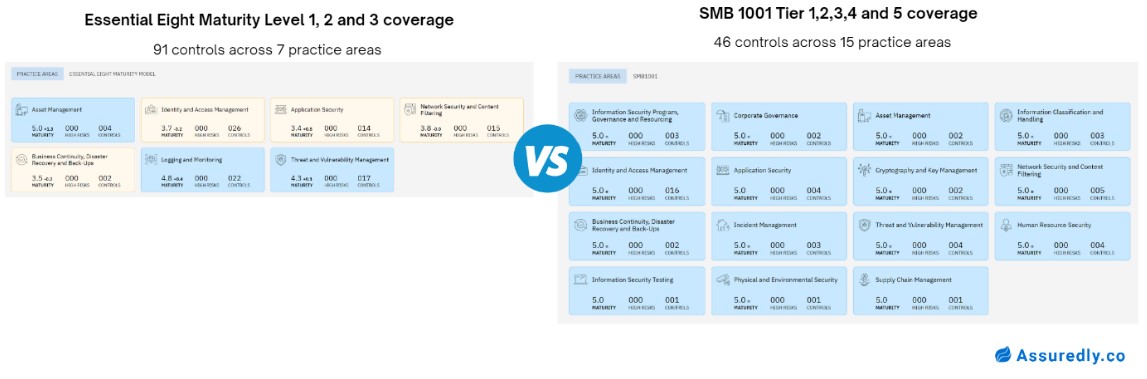
It covers essential security practices across various areas such as incident response, risk management, and employee training, which are often overlooked by simpler frameworks like the Essential Eight.

So, what makes SMB1001 work?

The framework’s certification process is straightforward, practical, and built around five areas of focus:

  • Technology Management – This pillar focuses on managing and securing the technology infrastructure, including hardware, software, and networks. It involves implementing security controls such as firewalls, antivirus software, and intrusion detection systems to protect against cyber threats. Regular updates and patch management are also essential to ensure that all systems are protected against known vulnerabilities.
  • Access Management – This involves controlling and monitoring access to information systems and data. It includes implementing strong authentication mechanisms, such as multi-factor authentication, to ensure that only authorised individuals have access to sensitive information. Access controls should be regularly reviewed and updated to reflect changes in personnel and roles within the organisation.
  • Backup & Recovery – Regular data backups and having a robust recovery plan in place is important. It ensures that data can be restored in the event of a cyber incident, such as a ransomware attack. A well-defined recovery plan helps minimise downtime and ensures business continuity by outlining the steps to be taken to restore systems and data.
  • Policies, Plans, & Procedures – this involves developing and implementing comprehensive cybersecurity policies, plans, and procedures. These documents provide guidelines for the organisation’s security practices and response to cyber threats. They should cover areas such as incident response, data protection, and employee responsibilities. Regular reviews and updates are necessary to ensure that the policies remain effective and relevant.
  • Education & Training – The SMB1001 framework is designed to be clear, concise, and accessible even for those without a deep technical background. This approach can empower your non-technical staff to take ownership of your cyber security posture. Everybody, at all levels, gets the chance to contribute to keeping the organisation protected. The responsibility of cyber security involves the entire organisation:
    • Employees, by following best practices like not opening suspicious emails, using strong passwords, and regularly updating their software.
    • Managers, by allocating resources for cyber security training and tools.
    • Executives, by prioritising cyber security at a strategic level.

SMB1001 vs. The Essential Eight

Both frameworks have the same goal which is to enhance cyber resilience, but SMB1001 provides a more accessible entry point for businesses of all sizes. It also covers more of the key practice areas that support a robust security program.

In the contrary, the E8 requirements are more technical and complex to comprehend, often leaving small business owners confused and not confident enough to continue building out their security posture.

Take Action with a Reliable Partner

ADITS’ cyber security solution, CyberShield, is built around essential security controls outlined by the SMB1001 :23 Silver Tier 2. Take control of your cyber security today – with expert guidance. ADITS can help your business through comprehensive cyber security services in Brisbane and Townsville.

CyberShield Brochure

With data becoming an invaluable asset and stricter rules regarding its protection, we have enhanced our offerings with CyberShield +, an advanced cyber security solution for businesses. It includes everything from CyberShield, plus a cyber security awareness program through uSecure and compliance to the mandatory Privacy Act.

CyberShield+ Brochure